Why Your School’s Website Is Your Most Important Classroom

School website development is the creation of a professional, user-friendly online presence that serves as your institution’s digital front door, enrollment engine, and community hub. For vocational and technical schools, it’s about building a platform that consistently attracts prospective students, engages families, and showcases your unique programs.
Essential elements of effective school website development include:
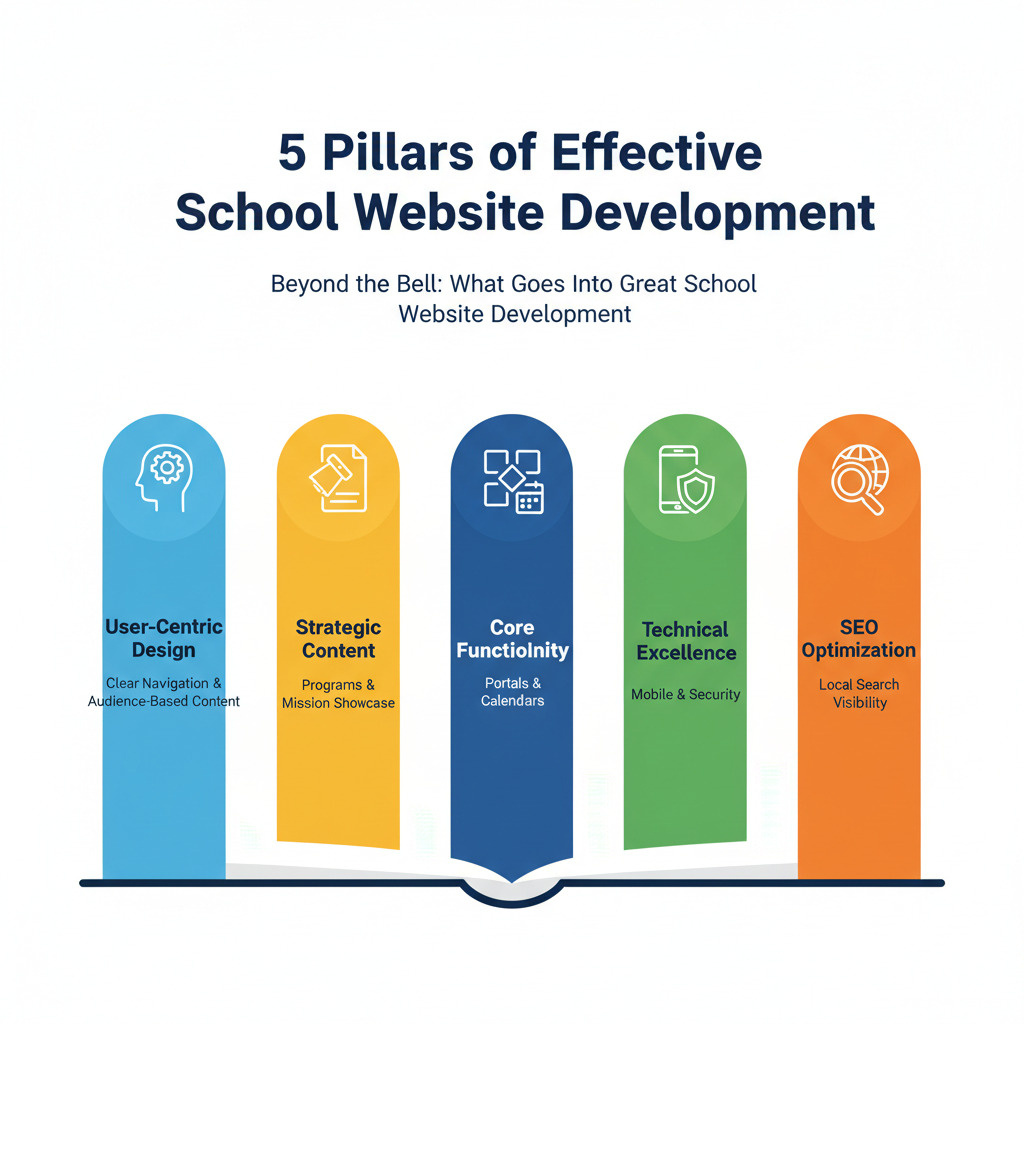
- User-centric design with clear navigation for all audiences.
- Mobile responsiveness to cater to the 75% of prospective students on mobile devices.
- Strong calls-to-action that drive inquiries and applications, boosting conversions by up to 121%.
- Dynamic content like blogs, which can generate 55% more leads.
- Accessibility compliance (ADA/WCAG) to serve all users and avoid legal issues.
- Local SEO optimization to attract students in your service area.
- Robust security to protect student and staff data.
Think of your website as your new front entrance where first impressions happen. In today’s competitive landscape, an outdated or confusing website actively pushes prospective students toward your competitors. Users often leave a site if they can’t find what they need within three clicks, so every design choice matters when converting visitors into enrolled students. Strategic school website development can transform enrollment outcomes for vocational and technical institutions by turning visitors into leads—and ultimately, into students.
The Blueprint: Essential Features and User-Centric Design
Effective school website development starts with your visitors. Can they find what they need in three clicks? Research shows that’s your window before they leave. A prospective student needs to find program details, a parent needs the student portal, and a donor needs to know how to give—all without frustration.
Your website should be a helpful guide, not a maze. That’s why we build with audience-based navigation, creating clear pathways for each visitor group: prospective students, current students, parents, and staff. This gives everyone a personalized experience without wading through irrelevant information.
Parent and student portals are essential for modern vocational schools. These secure areas allow parents to check progress and handle payments, while students can access course materials and communicate with instructors. This convenience also reduces the administrative load on your staff, freeing them to focus on more meaningful interactions.
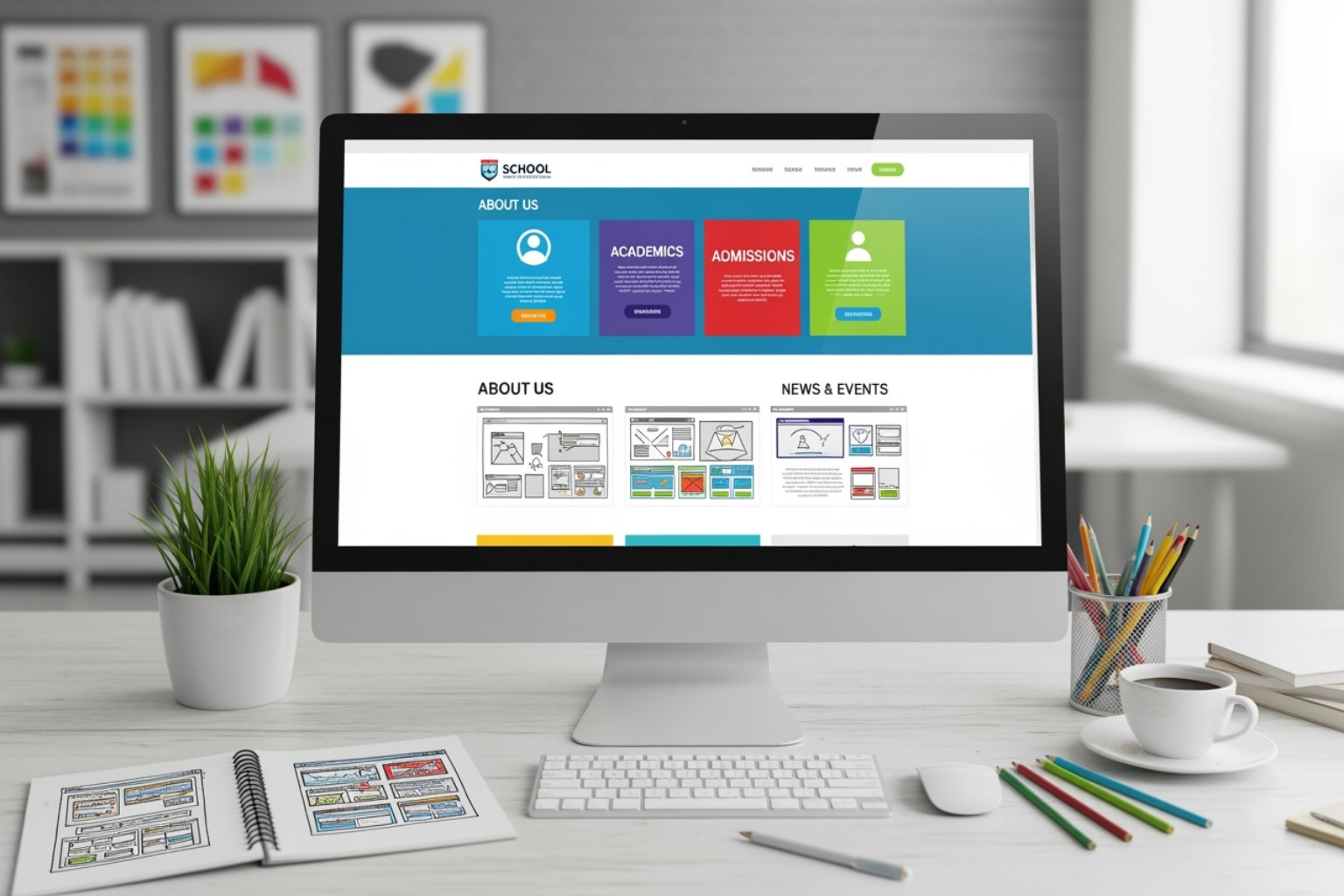
To cover all bases, we recommend these 10 essential pages: Home, About Us, Admissions, Academics/Programs, Events Calendar, News/Blog, Faculty Directory, Contact, Parent Portal, and Donate/Give.
Designing for Your Audience and Mission
Great school website development creates an experience that reflects your institution’s identity. Your website must be useful, memorable, effective, and secure. For vocational schools, this means showcasing what makes you unique. If you train automotive technicians, show students working on real vehicles. If you have a culinary program, feature images of student creations and graduate testimonials.
Your website communicates your values through colors, images, and tone. Schools like Khan Lab School use vibrant visuals and clear calls-to-action, while Zaytuna College radiates purpose through thoughtful imagery. They understand their website is a storyteller, connecting emotionally with prospective students and families.
Key Differences in Website Needs
Not all school websites are the same. The priorities for a public community college differ from those of a private vocational school, which is crucial for effective school website development.
Public and community colleges focus on transparency and resource access for current students, parents, and the community. Their content centers on calendars, policies, and district news, with a design that prioritizes clear organization. Key features include portals for grades, news alerts, and school board information.
Private and vocational schools, however, prioritize enrollment marketing, brand building, and donor engagement. The audience includes prospective students, alumni, and donors. Content highlights program benefits, success stories, and admissions details. The design requires compelling visuals, strong calls-to-action, and a unique brand identity. Functionality centers on application forms, virtual tours, and donation portals. At Brain Jar, we specialize in building these powerful enrollment tools for vocational, trade, and technical schools.
From Clicks to Community: Driving Enrollment and Engagement
Your school’s website shouldn’t just sit there waiting to be found—it should actively work to turn browsers into applicants. In school website development, every click is an opportunity to inspire action or lose a potential student to a competitor.
Clear calls-to-action (CTAs) are strategic invitations that guide visitors toward enrollment. A well-placed “Apply Now” or “Schedule a Tour” button makes the next step obvious. Websites with clear CTAs see a 121% increase in conversion rates on key pages, doubling inquiries and applications. Our guide on Boost School Enrollment dives deeper into these strategies.
Engaging visuals and videos transform websites from informational to inspirational. Pages with video keep visitors engaged 88% longer. A virtual tour of your welding lab or a testimonial from a successful graduate helps prospective students imagine themselves on your campus, building excitement and familiarity before they even visit.
Using Dynamic Content for SEO and Community Building
A dynamic website is a living hub that serves your community and improves search visibility. Blogs and news sections are powerhouses for this, as schools with regularly updated content generate 55% more leads. Posts like “5 Career Paths After CDL School in Houston” target keywords prospective students are searching for and build trust by providing helpful information. This is a natural way to feature student success stories and testimonials, which provide powerful social proof.
An integrated event calendar also boosts engagement, with schools seeing a 32% increase in time on site. By keeping your community informed about workshops and activities, you create a connected campus experience. For many private schools, fundraising and donor portals are also crucial, turning the website into a platform for financial sustainability. Explore more strategies in our guide on Online Marketing for Schools.
Effective Strategies for School Website Development
Effective school website development for vocational schools means making your programs shine. Go beyond a simple list of courses by creating dedicated program pages that detail what students learn, the certifications they’ll earn, and their career potential. For large catalogs, program finders are invaluable, allowing students to filter options by interest or schedule.
Building a strong brand identity is about consistently and authentically representing who you are. When your visual identity, messaging, and tone align, you build trust. Adhering to professional web standards, as outlined by organizations like the World Organization of Webmasters, shows you are a serious, reliable institution. Your website should feel like an extension of your campus: welcoming, informative, and inspiring.
Technical Foundations for a Secure and Accessible School Website
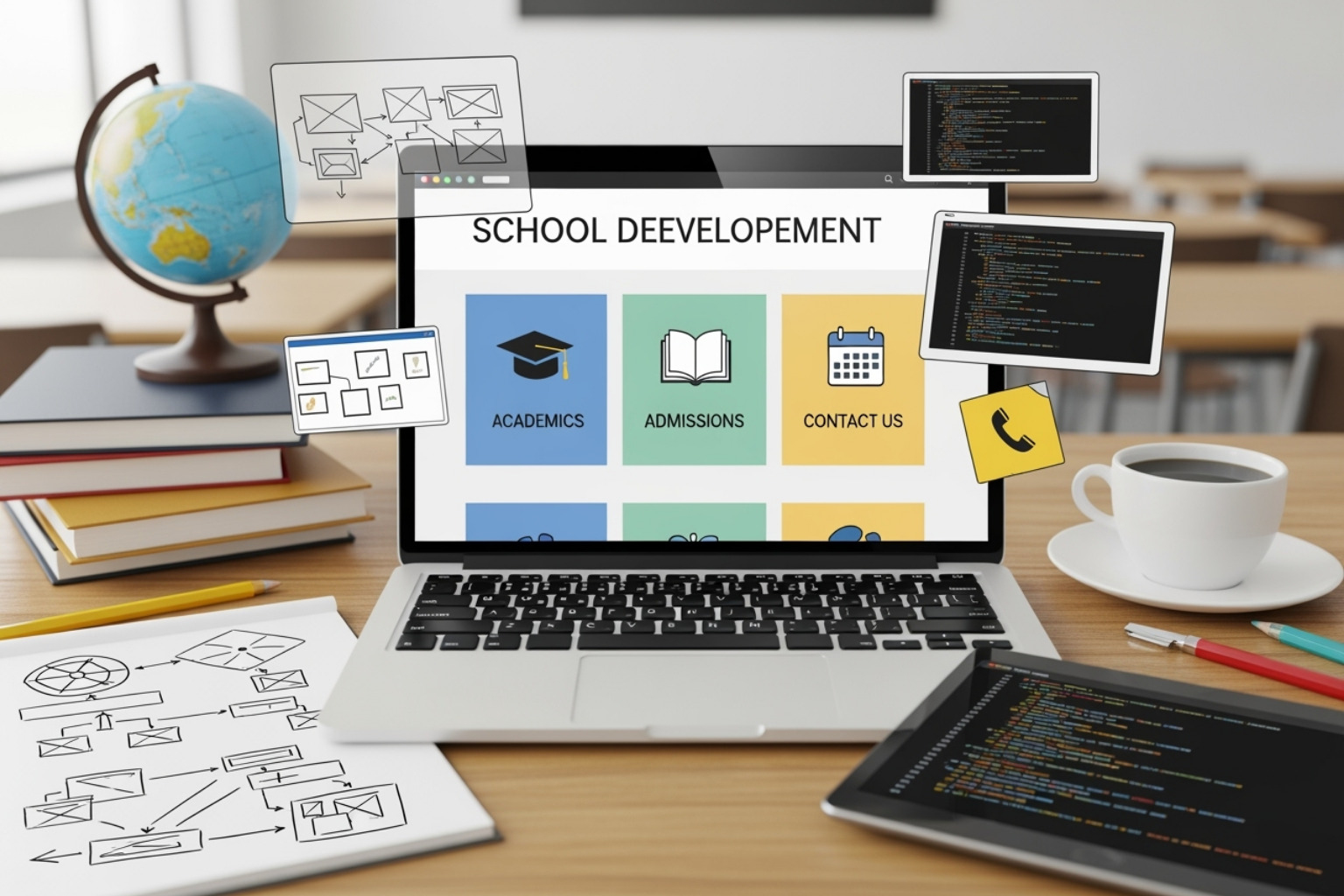
In school website development, the behind-the-scenes technical infrastructure is as crucial as the visible design. A solid foundation ensures your site is fast, secure, and welcoming to everyone.
Mobile responsiveness is essential, as 67% of parents and 75% of prospective students browse on mobile devices. If your site isn’t mobile-friendly, you’re turning away a majority of your audience. Google also uses mobile-first indexing, meaning it prioritizes the mobile version of your site for search rankings. A responsive design automatically adapts to any screen, keeping visitors engaged.
Website security is also critical. Schools handle sensitive data, making them targets for cybercriminals. We build every site with SSL certificates (the “https://” and padlock icon) to encrypt data and protect against hackers. We also implement layered security to guard against malware and other threats. Strong data privacy practices are vital for complying with regulations and building trust with your community. If your site is slow, security and hosting are often factors, an issue we cover in our guide on Why is my website loading so slowly?
Accessibility, SEO, and Choosing the Right Platform
In 2023, 71% of ADA lawsuits involved inaccessible websites. Beyond legal risks, website accessibility is about providing equal access to everyone. Following WCAG (Web Content Accessibility Guidelines) 2.1 Level AA standards ensures your site works with screen readers, has proper color contrast, includes alt text for images, and allows for full keyboard navigation. This inclusive approach benefits all users and reinforces your commitment to serving a diverse community. Learn more about optimizing your local presence in our guide on Local Search Optimization for Technical Colleges.
Your Content Management System (CMS) is the control panel for your website. Dedicated school website builders offer turnkey solutions with pre-loaded educational features. However, we often recommend flexible platforms like WordPress with custom development. This approach offers unlimited flexibility to add specific features, integrate with any system (like your CRM or payment processors), and create a unique experience that reflects your school’s character. We help you choose the right platform to meet your goals now and in the future. For a deeper look at our capabilities, see our Web Development Services Complete Guide.
Frequently Asked Questions about School Website Development
What is the typical investment for a school website?
Think of your website not as an expense, but as a capital assetdigital infrastructure that supports enrollment and community engagement for years. A well-built site should serve your school for at least five years.
The investment for school website development depends on several factors:
- Custom vs. Template Design: A fully custom site offers more flexibility and differentiation than a template but requires a larger investment.
- Features and Functionality: A simple informational site costs less than one with integrated student portals, custom program finders, or advanced event management.
- Integrations: Connecting to your Student Information System (SIS), payment gateways, or donor platforms adds complexity but improves efficiency.
- Content Creation: Professional photography, video, and copywriting are essential for telling your story effectively.
We work with each school to define a scope that delivers real value and a measurable return on your investment.
How can our website be optimized for local search?
For vocational schools, local search optimization is critical for enrollment. When a parent searches for “welding classes near me,” you need to appear.
We achieve this by:
- Optimizing your Google Business Profile with accurate information, compelling photos, and regular updates.
- Using location-specific keywords throughout your site (e.g., “HVAC certification Southern California”).
- Creating local content, such as blog posts about partnerships with local employers or student success stories from your area.
- Gathering local reviews from satisfied students and alumni to build trust and boost search rankings.
These strategies ensure you connect with the right students in your service area. For a complete roadmap, explore our Local Digital Marketing Ultimate Guide.
How long does the school website development process take?
The timeline for school website development varies with project complexity and client feedback speed, but most projects take 3 to 6 months. The process typically follows these phases:
- Findy and Planning (2-4 weeks): We define goals, analyze competitors, and create a project roadmap.
- Design (4-8 weeks): We create wireframes and visual mockups for your review and approval.
- Development (8-16 weeks): Our developers code the site, integrate features, and set up the back-end systems.
- Content Migration (2-4 weeks): We populate the site with your text, images, and videos.
- Testing and QA (2-4 weeks): We rigorously test every page and feature on multiple devices to ensure quality.
- Launch and Training (1 week): We take the site live and train your staff on how to manage it.
Clear communication and timely feedback are key to keeping the project on schedule.
Conclusion: Building Your School’s Digital Future
Your school’s website is the heart of your digital presence, a powerful tool that attracts students, engages families, and builds community. We’ve covered the essentials of effective school website development: from intuitive, mobile-responsive design and compelling calls-to-action to the dynamic content and technical foundations that ensure security and accessibility for all.
However, a website is never truly “finished.” It’s a living asset that must evolve with your institution. The most successful school websites are dynamic platforms that adapt to the changing needs of your community. This is why choosing the right partner for your school website development journey is so important. You need a strategic ally who understands the unique challenges and goals of vocational and technical schools.
At Brain Jar, we specialize in helping vocational, trade, and technical schools thrive online. We know your website must work as hard as you do to drive enrollment, showcase your hands-on programs, and tell the stories that make your institution special. We build websites that convert a local search for “CDL training in Dallas” into an enrolled student.
Your school’s digital future starts with a website that makes parents feel confident, helps students envision their careers, and makes the enrollment process clear and inviting. Let’s build a digital presence that drives real results for your institution.
Ready to build something remarkable? Start building a school website you will be proud of and let’s create a digital presence that drives real results for your institution.