
Why old inquiries still want in: Re-Engage Dormant CRM Leads
Re-engaging old student inquiries fills empty career school seats faster than buying new ads. Most independent training schools have hundreds of past inquiries from the last year sitting untouched in their computer. When you reach out with a simple, friendly text message, you can turn those forgotten inquiries into confirmed campus tours and fill upcoming class starts without spending another dime on ads.
Why Old Inquiries Still Want In
Old inquiries from six to twelve months ago are still good prospective students. When someone asked about your welding, CDL, or dental assisting program, their interest was real. Life got in the way, not a change of heart. Schools that ignore these past inquiries leave thousands of dollars in tuition sitting on the table.
What stops a motivated person from enrolling?
Busy shift work, family needs, and money timing are the most common roadblocks. A single parent working night shifts cannot attend daytime phlebotomy classes. A warehouse worker might freeze when a tuition deposit deadline arrives. Neither person lost interest in changing careers, they just hit a temporary wall.
How does a school know which old inquiries are still interested?
The easiest way to find out who is still interested is to ask them with a short, polite check-in. Most people do not reply to long sales emails, and many feel awkward explaining why they never enrolled. A simple, friendly message opens the door so they can tell you if their schedule opened back up or if they are ready for your next start date.
How 500 Old Inquiries Can Fill 5 Empty Seats
You do not need a massive list of 10,000 names to fill your next class start. A simple check-in campaign on a list of 500 past inquiries turns silent records into booked campus tours without buying a single new ad.
What math makes 500 old inquiries worth reaching out to?
Look at the everyday numbers for an independent career training school:
- 500 old inquiries from the past 6 to 12 months.
- 100 people reply to a short, friendly text check-in.
- 15 to 20 people book a campus tour or phone visit.
- 5 students enroll in your next upcoming class start.
If your program tuition is $4,000, those 5 filled seats bring $20,000 in tuition back to your school. You already paid to bring those inquiries in months ago, now you are simply picking up the tuition you left behind.
How does the 4-step check-in process work?
- Clean up the list first. Check every phone number so you only text real cell phones, and separate older inquiries from your daily school phone line.
- Send a short, friendly check-in. Ask a simple question with zero sales talk to see if they are still looking at classes.
- Reply within minutes. When someone texts back with interest, answer their basic catalog questions right away while they still have their phone in their hand.
- Book the campus tour. Offer two specific times to visit the campus that same week and place the tour straight onto your advisor’s calendar.
Old Follow-Up vs. Simple Text Check-In
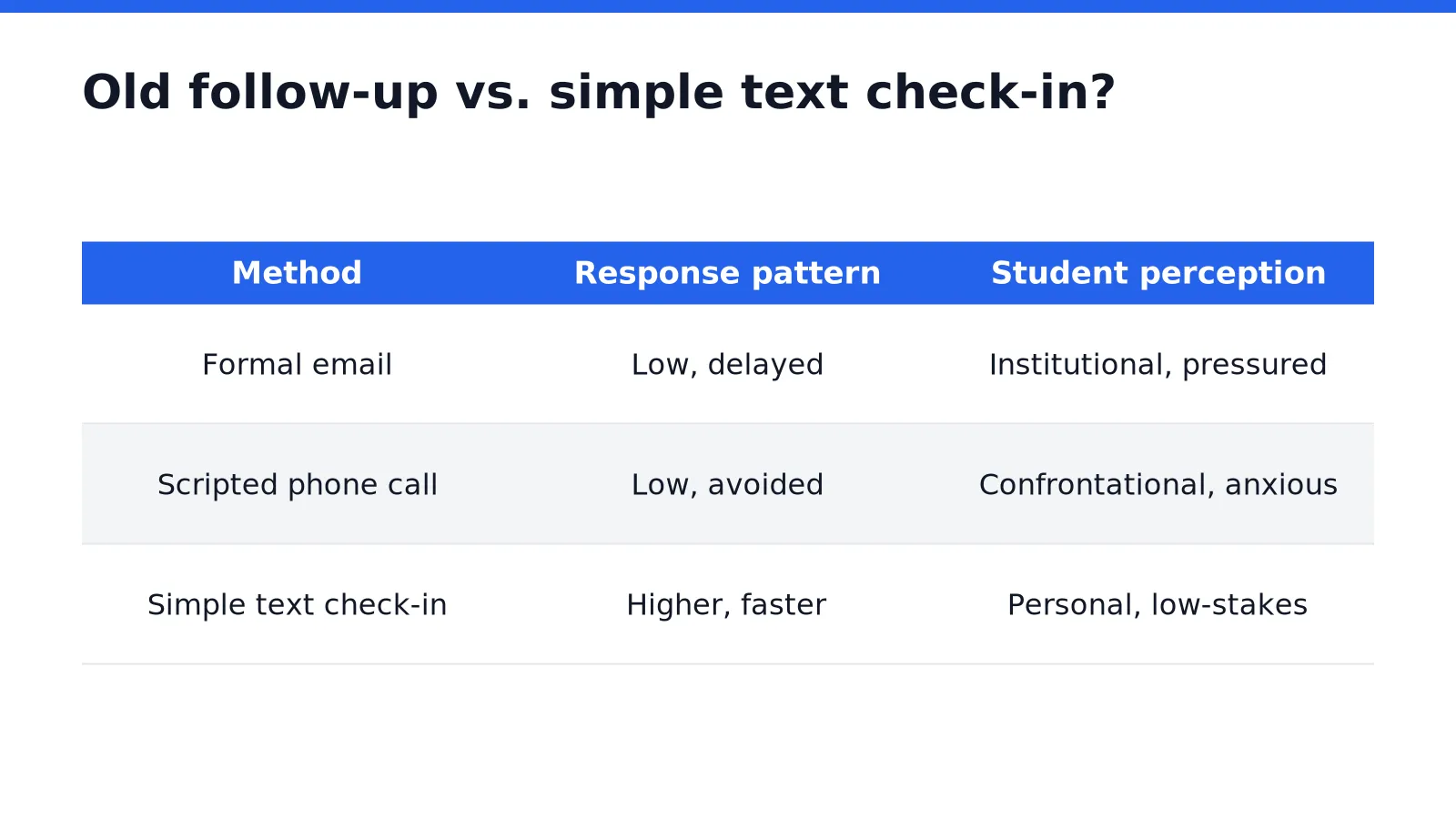
Old admissions follow-up habits get very few replies compared to a simple text message. Long emails and cold phone calls feel like pressure, while a short text feels like a real person checking in.
Why do phone calls and long emails fall flat?
Adult shift-workers are busy at their jobs during the day and cannot answer unknown phone calls. They also ignore long emails packed with flyers and big words. A short text message meets them right on their phone without putting them on the spot.
| Follow-Up Method | How People Respond | How It Feels to the Student |
|---|---|---|
| Long marketing email | Very few replies, deleted fast | Feels like a mass sales ad |
| Cold phone call | Goes to voicemail, starts phone tag | Feels awkward or high-pressure |
| Simple text check-in | Fast replies from busy adults | Feels personal and helpful |
3 Simple Text Check-Ins That Start Conversations
Short text messages work best when they sound like a helpful admissions advisor, not a billboard. Here are three simple messages that get replies without pitching:
- The Direct Check-In: “Hi Sarah, this is Alex from the admissions desk. Are you still thinking about starting phlebotomy classes this year, or did your plans change?”
- The Upcoming Start Date: “Hi Marcus, we are finalizing the roster for next month’s welding class and have 2 seats open. Would you like to see the night schedule?”
- The Quick Question: “Hi Elena, I saw you asked about our dental assisting program a few months ago. Are you still looking to get certified?”
What keeps text check-ins safe and legal?
Federal and state texting rules require you to only message people who already asked your school for information, and every first message must give them an easy way to opt out by replying “STOP.” Keeping your messages clean, polite, and compliant protects your school’s phone number and reputation.
How to Turn Text Replies Into Campus Tours
When a past inquiry texts back, they are ready to talk. Your goal is not to enroll them over text; your goal is to invite them in for a relaxed campus tour.
What should admissions check before booking a tour?
Before setting a time, confirm two simple things over text: which program they want and whether they need day, evening, or weekend classes. Checking schedule fit first ensures your advisors only spend time with people who can actually attend.
Why does a relaxed campus visit help students enroll?
Walking through the lab or training yard lets prospective students meet instructors, review the catalog, and go over tuition and payment options in a comfortable setting. Once they see the classroom in person, their confidence goes up and they are much more likely to enroll.
Common Questions From School Directors
How old is too old for a student inquiry list?
Inquiries from 30 days to 12 months ago bring the best results. Lists up to 18 months old can still fill a few extra seats, though more people may have moved or changed plans.
Will this create extra work for my admissions staff?
No. Automated text replies filter out wrong numbers and people who are no longer interested. Your staff only steps in when someone raises their hand to book a campus tour or asks a specific financial aid question.
Want to See How This 3-Step Flow Looks?
If you want to see how this works without changing your website or current software, we put together a simple 1-Page Revenue Recovery Diagram. It maps out the exact 3 steps: from cleaning your old list to putting confirmed tours on your morning calendar, with zero tech talk. Reach out anytime if you would like a copy to review for your next class start.
Brain Jar – 1 313-362-4314